How School Fun Run Shirts Work
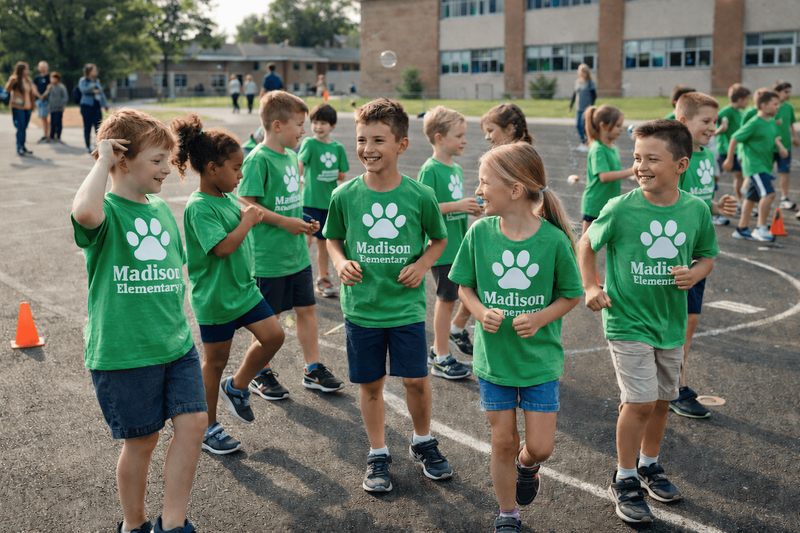
Give every kid a shirt, set a hard sponsor logo deadline, and lock production early. Shirts work as both student recognition and sponsor retention infrastructure.
Start here
Every student should get a shirt.
That keeps participation inclusive and gives families a visible symbol of the event.
Shirts also create a concrete sponsor benefit: logo placement on the back.
Why shirts matter for sponsors
Sponsor logos on shirts do two jobs:
- Immediate recognition during the fundraiser.
- Long-tail retention when families keep wearing the shirts.
If sponsor tiers include logo placement, set clear tier rules using Sponsor Levels.
Shirt timeline
Use this decision rule:
- 3 weeks if design and vendor are stable.
- 4 weeks if vendor is new or approval flow is uncertain.
- 5 weeks minimum if you need school-level proof and edits.
If you run a student design contest:
- 2 weeks for submissions.
- 1 week buffer for judging and production handoff.
Deadline dependencies you cannot ignore
Shirt success depends on upstream sponsor work. In other words, you need both the sponsor money and each sponsor’s logo before you can get the shirts printed.
- Sponsor close date must occur before final art lock.
- Final logo files should be due at least 3 to 5 business days before print submission.
- Family size collection must be frozen before order is placed.
Coordinate these dates in School Fun Run Timeline (2-3 Week Fundraiser).
Simple shirt operations checklist
- Confirm vendor and lead time in writing.
- Confirm color, size matrix, and quantity buffer.
- Lock sponsor logo deadline.
- Lock final proof approval owner.
- Submit order with one documented final version.
Next, decide donation mechanics in Fun Run Donation Models: Flat Donations vs Per-Lap Pledges.